Poison Alerts

SPECIAL ALERT: Are We Helping Amlodipine Overdose Patients With High-Dose Insulin Therapy? NO!
“HOUSTON, WE HAVE A PROBLEM.” High-dose insulin euglycemic therapy (HIET) was first recognized as an apparently miraculous rescue therapy for Calcium Channel Blocker (CCB) overdose about two decades ago. Since then, it has become standard therapy for CCB overdose, but without the necessary regard for differences between the two major classes of these drugs, Dihydropyridines (DHP) and non-DHPs. HIET works well for some patients, but not for others. Why? The recently published literature was coalesced to answer this key question. Amlodipine is the most common CCB agent seen in overdose, and HIET may be preventing amlodipine-overdose patients from recovering. In…
Antidote Chart
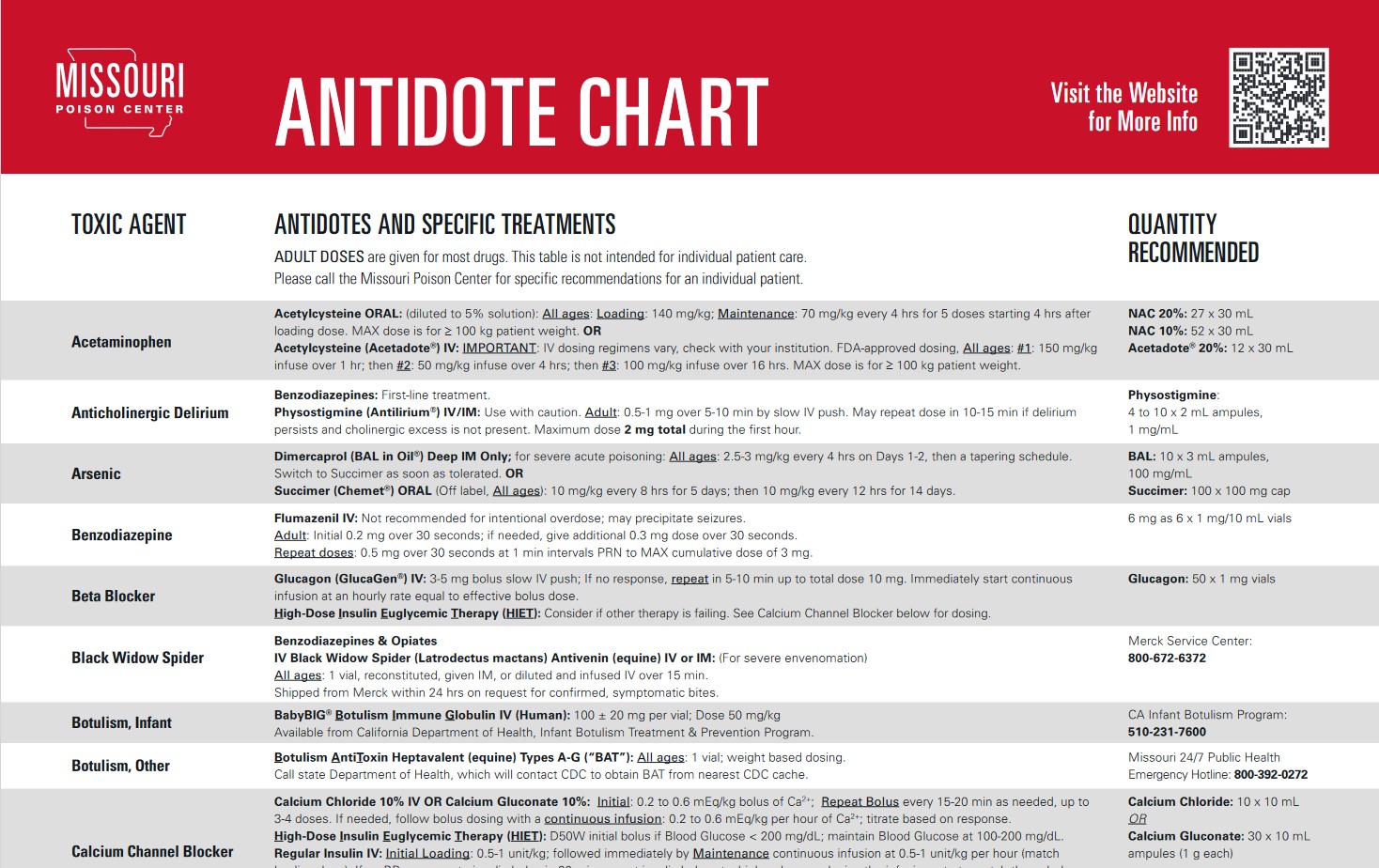
Click the button below to download the most recent version of the Missouri Poison Center’s Antidote Chart.
Revised in 2021
Professional Education
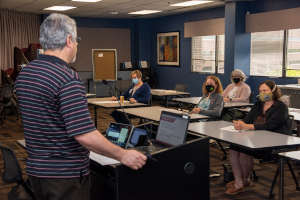
Professional education is a priority at the Missouri Poison Center. The center offers various educational programs for licensed health care providers, medical residents, fellows in training, and students from multiple medical disciplines. Our professional staff provides programs on-site, at universities, and in health care facilities throughout Missouri.

Pharmacy Education
The Missouri Poison Center serves as a training site for Advanced Pharmacy Practice Experience (APPE). This on-site five-week rotation allows the student the opportunity to learn basic clinical toxicology principles and experience the operations of the poison center. This dynamic and interactive rotation is under the guidance of a toxicologist and poison specialists.

EMS/First Responder Training
EMS providers need to know when to call the poison center. Often, such a call can save lives, prevent unnecessary emergency department visits, and fast-track treatment. Learn which toxic situations warrant a call to the Missouri Poison Center. Click here to learn more.
Supporting Healthcare Providers

- Poison specialists help hospitals care for their poisoned patients by providing optimal care and serving as a safety net for risk management.
- Our team follows patients through their hospital stay and continues to make treatment recommendations as necessary.
- Patients managed with poison center expertise experience shorter hospitalizations, which helps health care providers improve the quality of care and decrease overall health care costs.
Important
All calls to the Missouri Poison Center are confidential. Patient information is protected in compliance with HIPAA regulations, with poison centers recognized specifically recognized within the privacy rule.
Take The Missouri Poison Center With You
Emergencies don’t wait for you, so you shouldn’t have to wait to call for help. Get the Missouri Poison Center app with poison information and a link to the Poison Help Line. It is just a click away during the most stressful moments. Our registered nurses and pharmacists are here 24/7/365 days a year to help guide you through poison exposures and overdose emergencies.
Don’t wait. Download now.